If you are not fond of throwing food away and/or want to start adding nutrients back in your soil, the Mill Food Recycler might be worth adding to your home or homestead. Today I’m giving my honest review of the Mill Food Recycler after using it daily for my family of 5.
If you are not fond of throwing food away and/or want to start adding nutrients back in your soil, the Mill Food Recycler might be worth adding to your home or homestead. Today I’m giving my honest review of the Mill Food Recycler after using it daily for my family of 5.
This post contains affiliate links, which means I may make a small commission off items you buy at no extra cost to you. As an Amazon associate, I earn on qualifying purchases. See my full disclosure here.
We have tried several forms of composting from a countertop composter, to just throwing scraps in the backyard (this is not the right way to do it), to using a stand up bin (I detailed how we did that in this post), to just using the curbside pick up. All of these ways had a significant downside, whether that be that they weren’t easy to do or just didn’t work well.
When I was doing research into the Mill Food Recycler, it looked SUPER easy to just throw all of your food scraps inside and it does the work for you. But, it doesn’t actually turn your food into compost.
So is it still worth it?
That’s what I’m going to be diving into in this post.
I’ll walk you through:
- What the Mill Food Recycler is
- How it works for our family of five
- What can and can’t go into it
- Pricing, rental details, and the app features
- Pros and cons from daily use
- And finally—whether I recommend it
Mill generously gifted me this unit so I could test it out, but all opinions are my own.
Save It For Later!
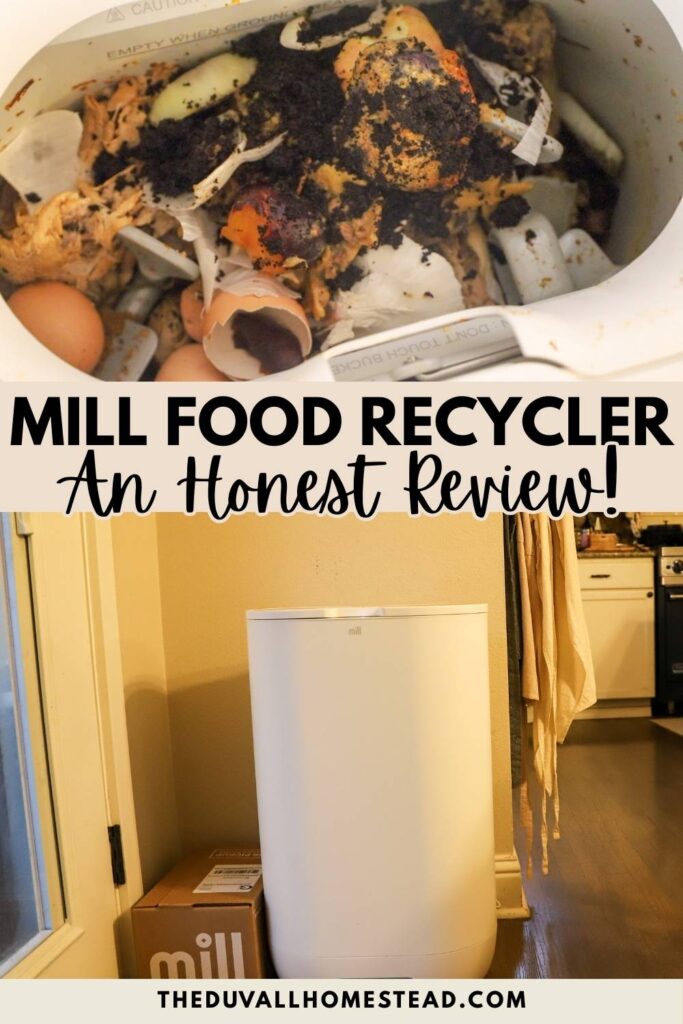
What is the Mill Food Recycler?
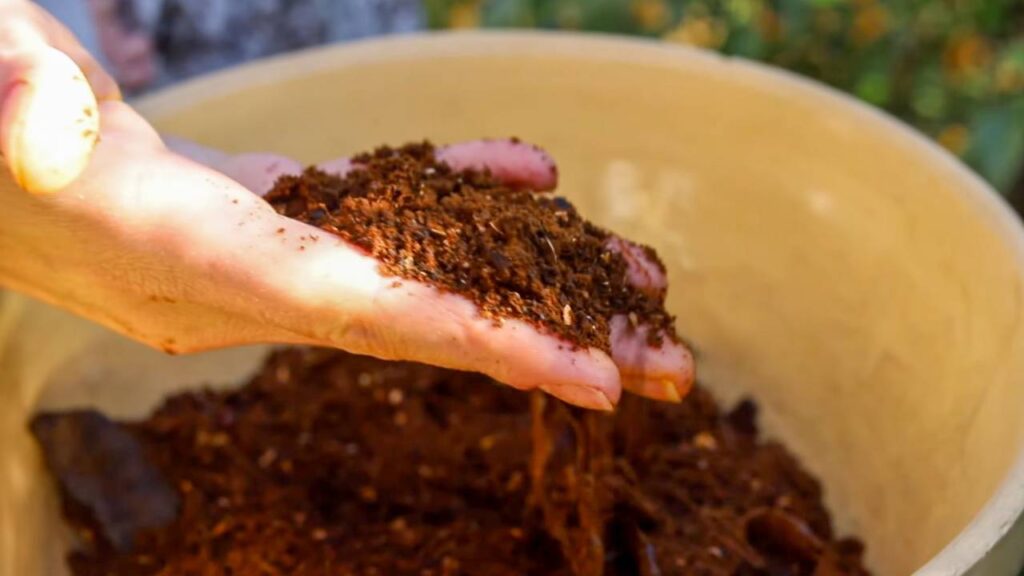
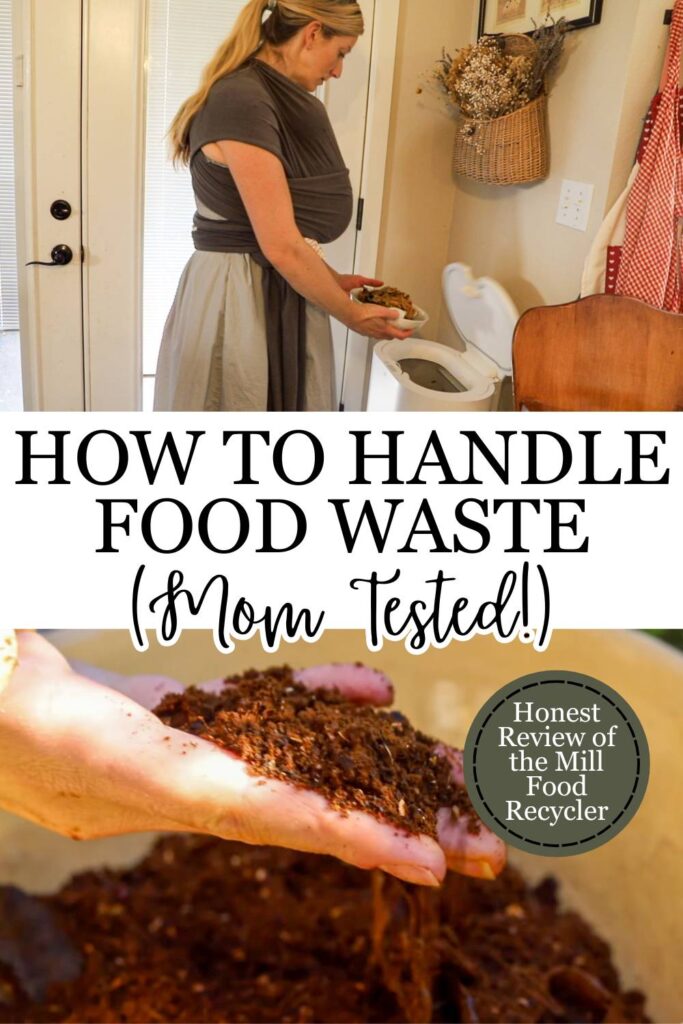
Mill is a food recycler that takes your raw food scraps like eggshells, banana peels, meat, and chicken bones, dries them out, grinds them, and turns them into a clean, shelf-stable coffee-ground-like material.
While the grounds aren’t actually compost, they act like a nutrient-rich fertilizer that can be mixed into compost, added to garden soil, or fed to chickens (with a few ingredient exceptions).
Most of us who aren’t composting at home end up throwing huge amounts of food into the trash. Once we started using the Mill, we realized just how much waste our family of five produces from daily cooking.
How We Use the Mill Every Day
We cook 3 meals a day in our home, so the kitchen is open almost all day long.
So I constantly have leftovers from chopping, peeling, and snacking, like little piles of onion skins, fruit peels, avocado pits, eggshells, bread crumbs, and old bone broth bones, just to name a few.
Here’s how it works on a daily basis for our family of 5:
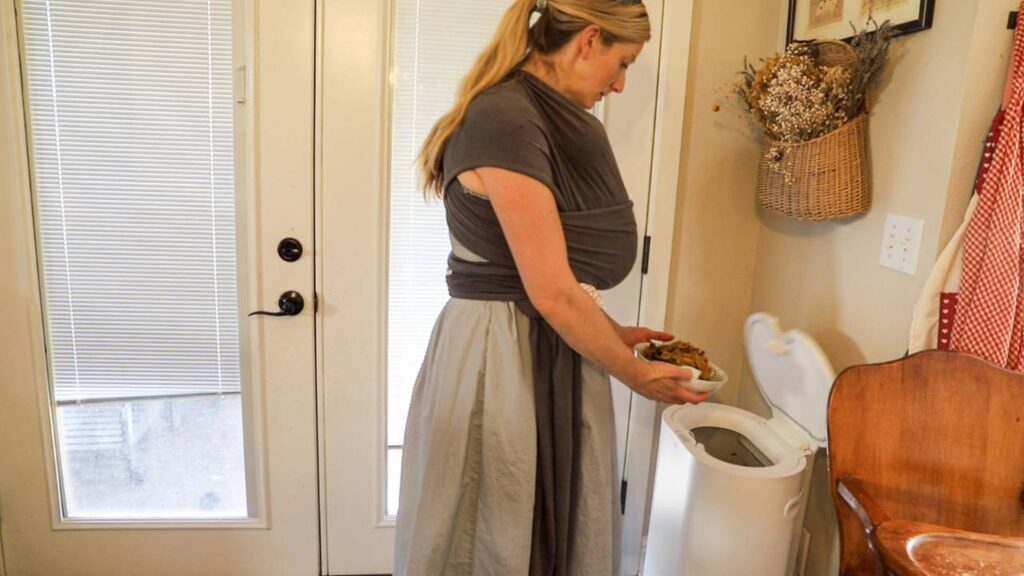
Throughout the day, I keep a bowl on the counter to catch any scraps that I make during the day like eggshells, banana peels, avocado skins, bread crusts, etc. Everyone in the family also scrapes their plate into the bowl after each meal – so all meal leftovers (that aren’t savable to reheat later) end up in that bowl.
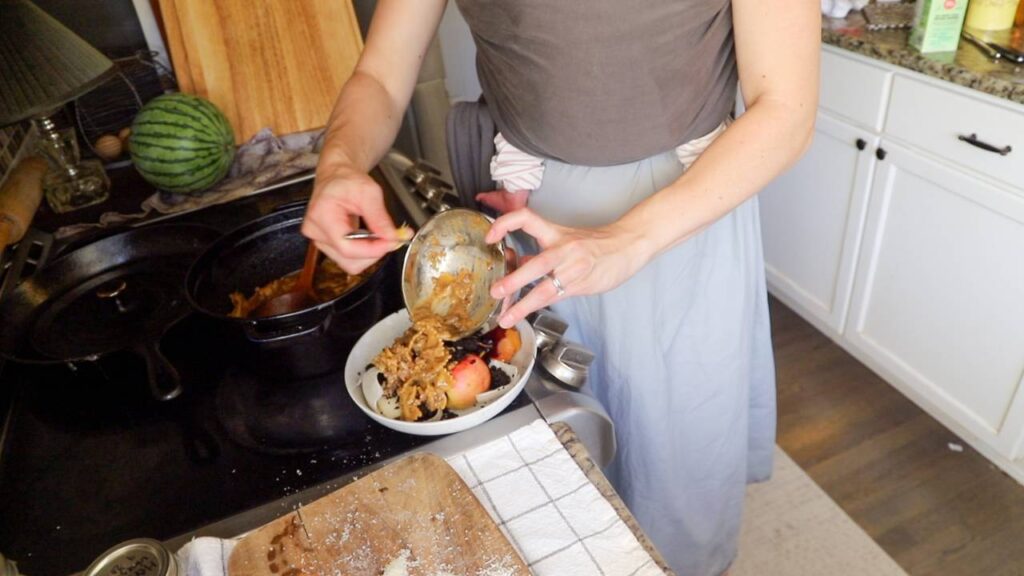
Once or twice a day, I empty that bowl into the Mill. Then at night, the Mill runs its drying and grinding cycle, and the next morning, all that food is now dry, odor-free food grounds.
You can even add an entire chicken (bone and all) into the Mill, which we do every time we make roasted chicken and turn it into bone broth.
The resulting grounds are odorless, shelf-stable, and compact, so we’re able to store them easily until spring gardening.
What Can You Put in the Mill?
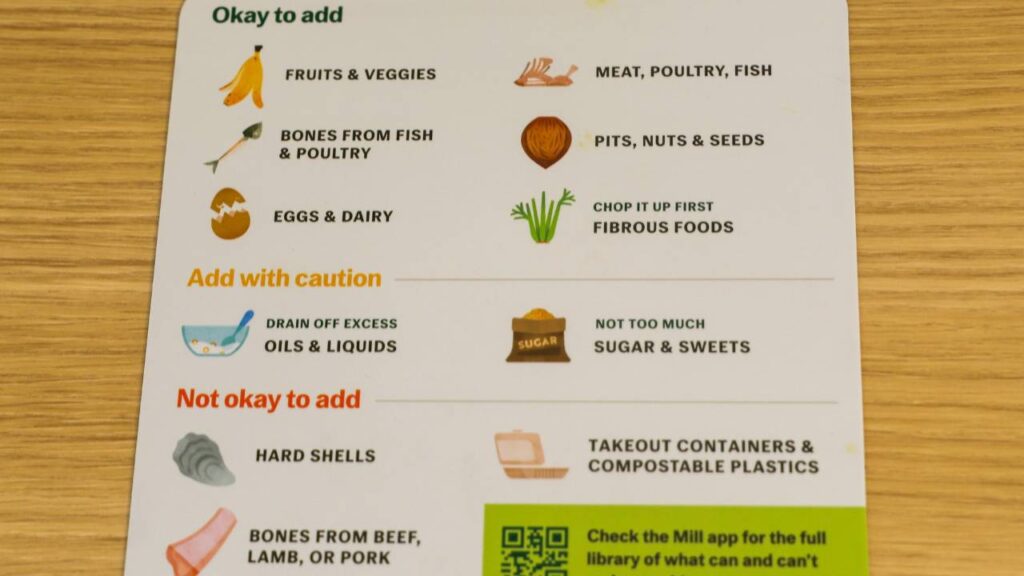
To cut to the chase the answer is basically everything. There are a few things on the Mill list that you cannot put in, but most everything is good to go.
Acceptable food scraps include fruit and vegetable scraps, eggshells, chicken and fish bones, bread and grains, coffee grounds, onion and garlic scraps, meal leftovers that can’t be saved, and avocado skins and pits.
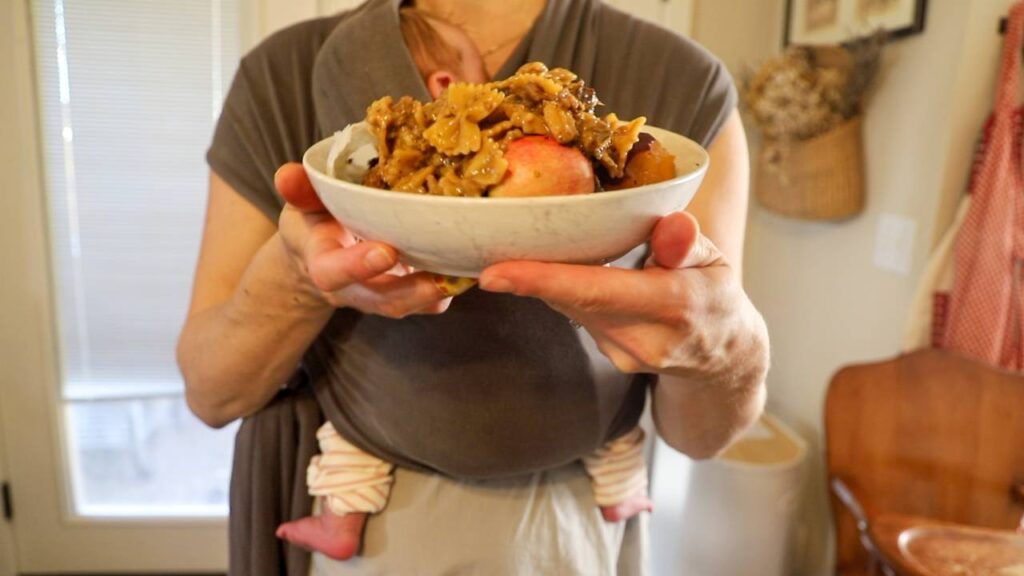
Non-acceptable food scraps include beef, pork, or lamb bones, whole fibrous vegetables like full celery stalks (need to chop first), shells like oyster or clam shells, and anything the machine would struggle to grind due to density.
What Do You Do With All the Food Grounds?
If you cook a lot like we do, you’ll end up with more food grounds than you probably need, UNLESS you are running a medium to large size farm with a lot of hungry soil you can feed the food grounds to.
You have three options for your food grounds:
Option #1: Use It in Your Soil
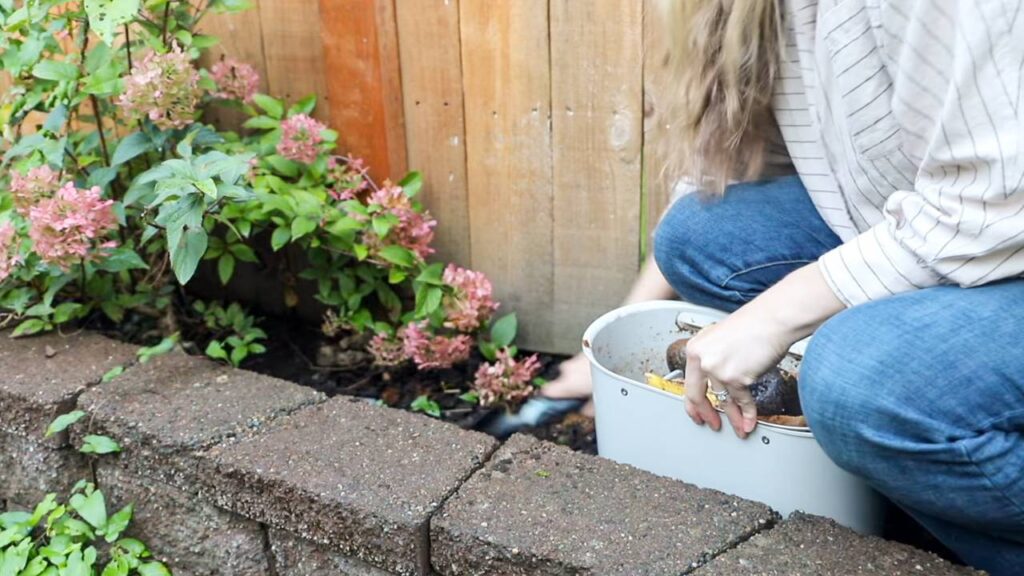
Mix the grounds with soil or compost for a nutrient boost. (You can’t use the grounds exactly like compost, but they function like a rich fertilizer that should be mixed into your soil.)
Here is a guide to how to calculate the amount of food grounds to use for specific soil amounts. On that guide it states “1.5 cups of food grounds into each cubic square foot of soil“.
We are currently saving some food grounds for spring gardening, because soil and even compost is expensive in our area! Although this can’t fully replace compost, it can add to it and let us buy hopefully a little bit less.
Option #2: Feed to Chickens
Chickens love it, but be mindful: avoid adding scraps that are toxic to chickens, like avocado pits or onion skins, if you plan to feed it to them.
Here is a complete guide to how to make homemade chicken feed with Mill food grounds.
We recently had to re-home our small flock of chickens and so I didn’t get to try this out with them yet. But I can imagine they would love it, because most of the food going into the Mill was food I would bring out to them and serve anyways.
So in this respect, it can help bring down the cost of chicken feed, which is great.
Send It Back to Mill
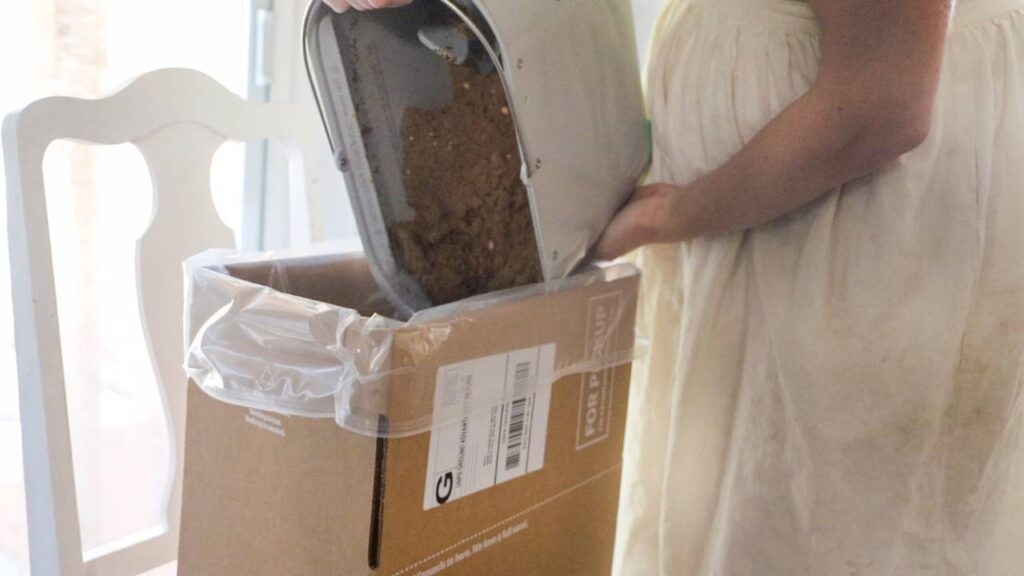
This is one of my favorite features. Mill provides bags and boxes and you simply fill them, schedule a pickup through the app, and a local carrier will pick the box up from your porch. Mill redistributes your nutrient-rich grounds to small farms. Note: this option is an add-on when you purchase or rent Mill.
Being that it’s currently winter time, I really appreciate this option. It’s SO convenient. I seriously love taping up the box and putting it on the porch, and then it takes about 5 seconds to open the Mill app and click the “grounds are ready for pickup!” button. And UPS gets it off our porch the next day!
I love that this option exists, and here’s why:
Many people (myself included) just feel super guilty about throwing away food. Some food just doesn’t reheat well though, and has to just be tossed. But Mill gets rid of all of that guilt because no matter what, your food scraps will be reused. I just love that!
No waste, no guilt, and no pressure to use everything yourself.
Pricing, Rental Options, and App Features
The Mill food recycler normally retails for $999. When I filmed my video review, it was on its Black Friday promotion, which brought the price down by $200. That was the biggest sale I had seen at the time.
I do have a special partnership discount for the Mill, which you can check out at this link, to save money any time of year.
If purchasing outright isn’t ideal, Mill also offers a rental option for $35 per month with a 12-month commitment. That adds up to $420 for the year and includes ongoing warranty coverage and replacement charcoal filters when needed. The rental option is currently only available in white, but the purchased units come in white, black, and stainless steel. There is also a buyout option if you decide later that you want to keep the machine permanently.
Another helpful factor is the 90-day return window. If you try it and decide it’s not for you, you can return it during that time.
You can also get a discount on Mill anytime by using this link for a special discount at checkout!

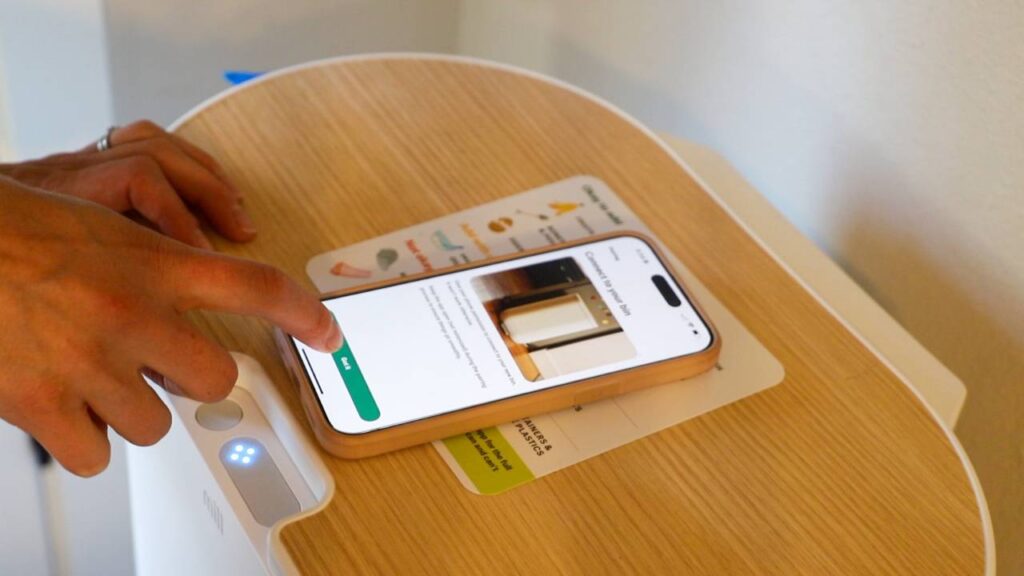
Mill connects to your phone through an app, which guides you step-by-step through setup, alerts you when the bin needs to be emptied, and allows you to schedule porch pickup for sending grounds back to Mill.
It’s super easy to use, and one of the best parts of Mill in my opinion!
Pros of the Mill Food Recycler
One of my favorite things about the Mill is that it accepts almost everything. I never have to stand over the trash unsure about what to save, what to compost, or what will smell if it sits out too long. Everything but heavy bones goes in.
Another major benefit is the drastic reduction in trash. Before owning the Mill, our trash would overflow every single week. My husband noticed it right away that our trash can was only half full. This means no more spending money on dump runs, which he especially appreciated!
It also eliminates the guilt that comes with tossing food. Even in a scratch-cooking household where we save and freeze as much as possible, some food just cannot be reused. Being able to recycle it instead of sending it to the landfill feels incredibly satisfying.
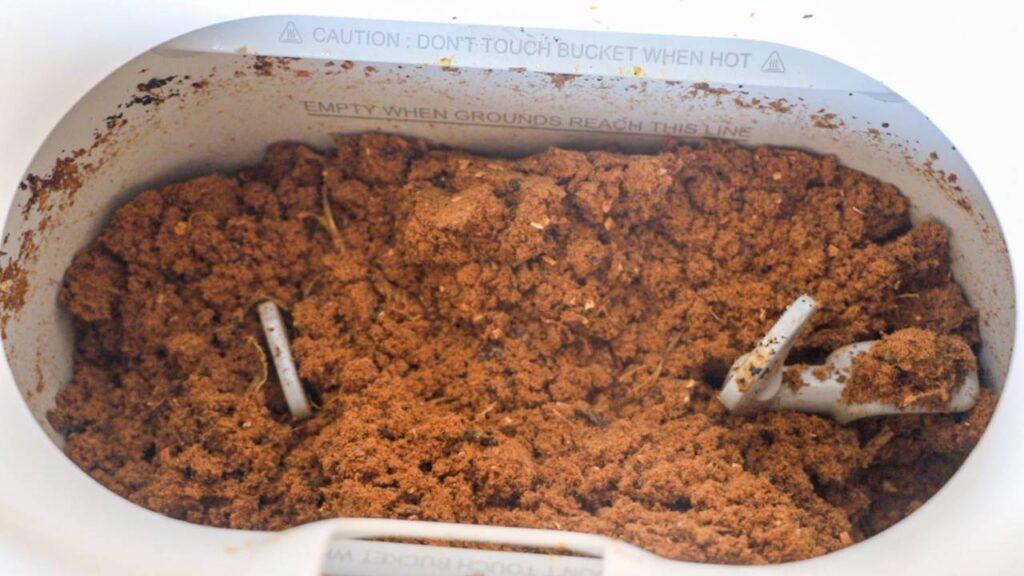
The Mill also creates real value for our garden. Fertilizers and compost can be expensive, and not everyone has access to rich soil. By recycling our food into grounds, we’re essentially putting nutrients directly back into our land.
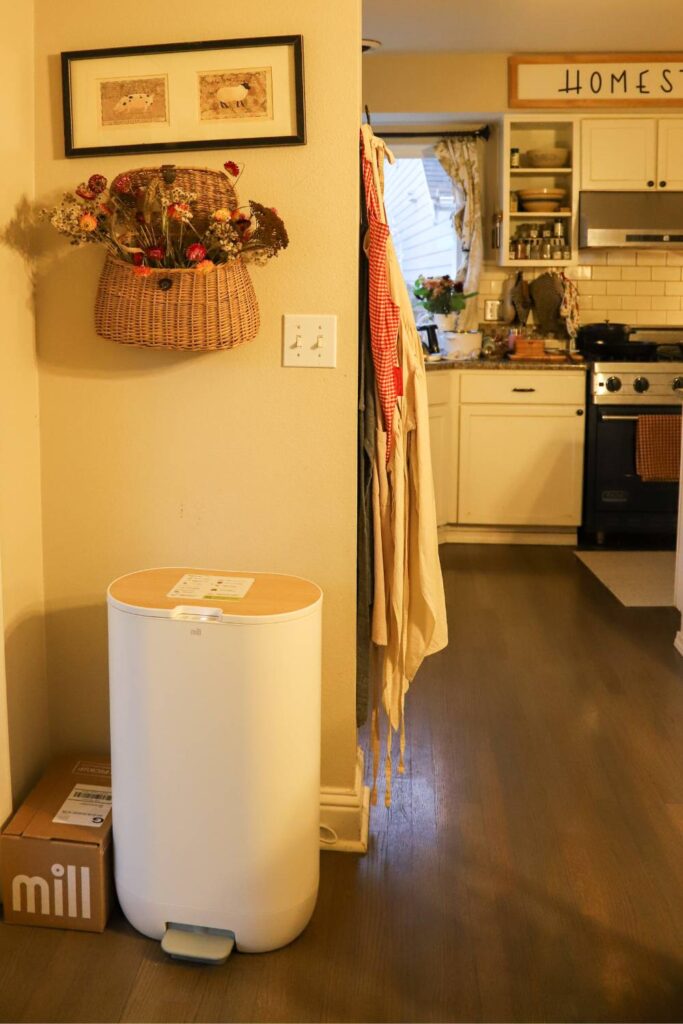
I also appreciate that the machine itself looks clean and modern. Ours is white and it blends into the kitchen just fine. It runs quietly at night, about the level of a low dishwasher hum, and doesn’t produce bad smells. When you open it in the morning, it has a mild earthy scent rather than a rotten smell.
The pickup service for extra grounds is the final cherry on top: Being able to box them up, leave them on the porch, and have them disappear the next day is incredibly convenient.
Cons of the Mill Food Recycler
My biggest frustration is that the bin fills quickly for a family like ours. The daily food bin is full by the end of every day, and the internal grounds container fills in about a week to a week and a half, even though the website suggests closer to 30 days. That will vary depending on how much you cook, but heavy-use households will be emptying it more often.
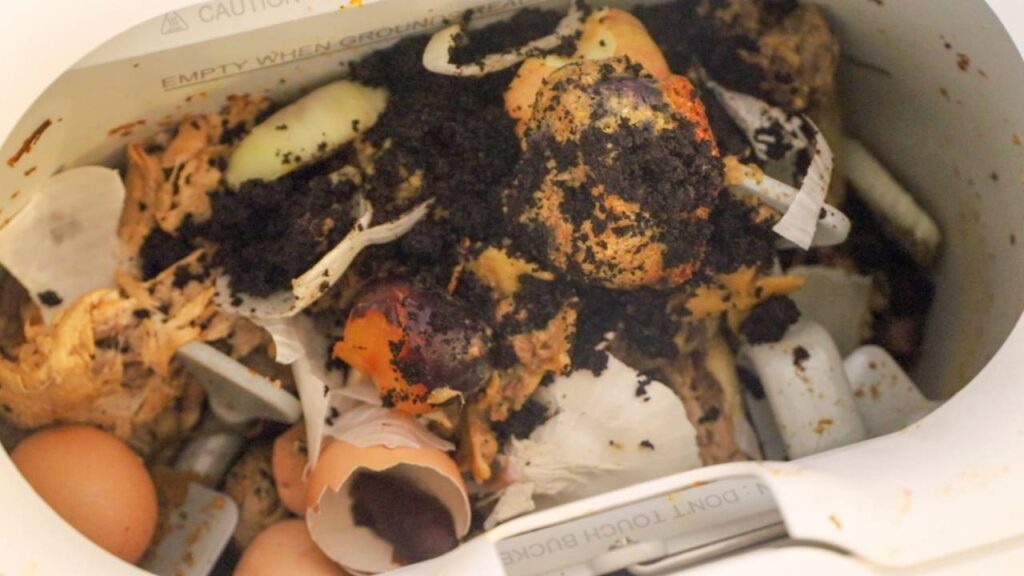
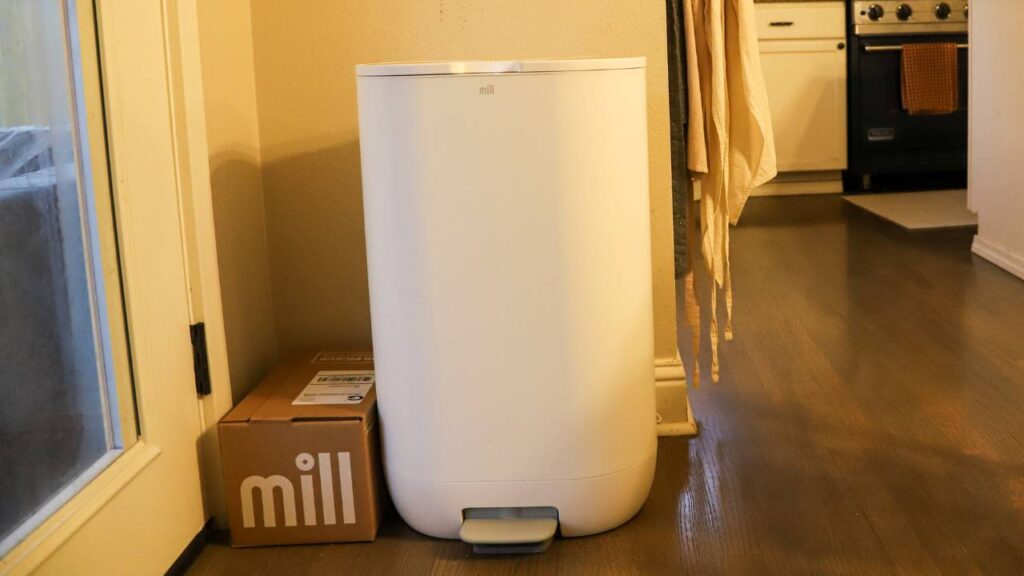
The next con is the size and weight of the machine. It’s large, heavy, and not easy to move once it’s in place. Anyone with a small kitchen will want to consider where it will live before committing.
The price is also significant. Whether you buy or rent, it’s an investment, though for some households it may pay for itself through reduced trash fees, less need for fertilizer, and supplementing chicken feed. Our trash costs are substantial and we used to make extra dump runs because of the overflow. Since using the Mill, our trash bin stays far emptier, which may save money depending on your local waste system.
Is the Mill Food Recycler worth it? (Recommendation)
Despite the cons I listed above, I truly cannot recommend this product enough. My biggest reason is it just solves the dilemma of what to do with food scraps after you’re done with them. AND, it does so in a sustainable way, that would significantly impact our world’s health and ecosystem if everyone did it.
Basically what I’m saying is after watching how much food scraps go into our Mill food recycler each day and seeing how those scraps are transformed into something that nourishes our soil or supports local farms, it feels like an incredibly practical and meaningful way to reduce waste.
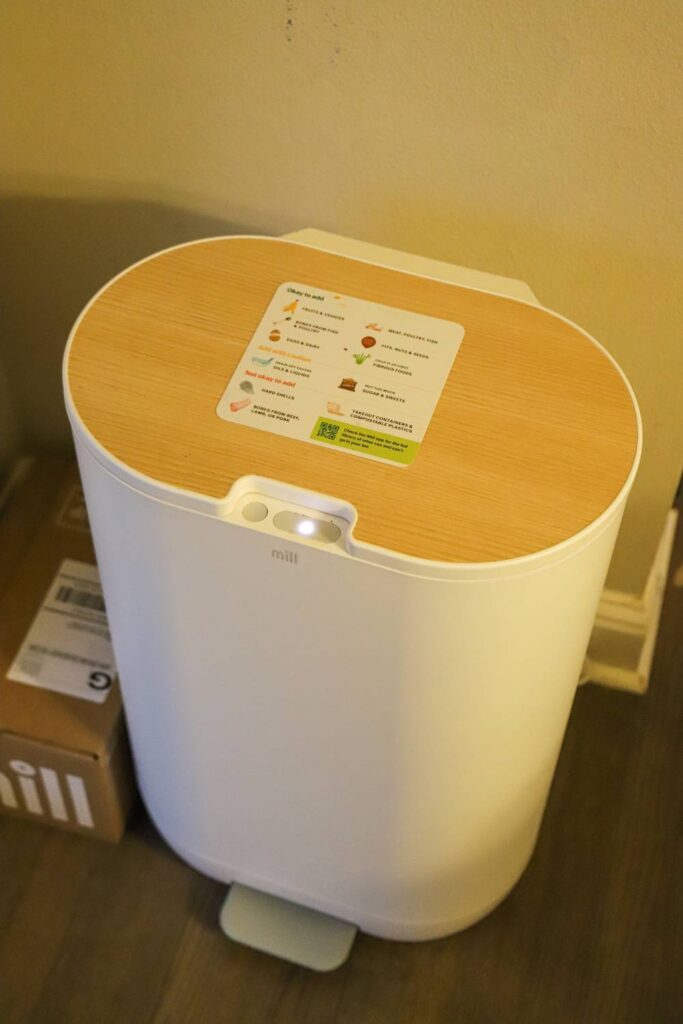
For anyone who cooks a lot, has a homestead, raises chickens, gardens, or simply wants an easy way to be more environmentally conscious, the Mill makes that possible without any extra effort. And, it saves you money on trash, compost/soil, and chicken feed.
If the price point isn’t a good fit for you right now, I’d start with the rental option. You’ll know quickly whether it fits your lifestyle, and the 90-day return window gives you plenty of freedom to test it out.
I genuinely wish something like this existed in every household. It would be incredible to see the impact. Until then, I hope more people discover tools like the Mill, because it’s one of the simplest, most effective swaps we’ve made in our home.
If you decide to give it a try, you can use this link for the Mill and get a discount at checkout!
Pin It For Later!

The point about the grounds not being actual compost is the part most reviews skip, so that distinction is useful, especially since it can still go into garden soil or a compost pile. One practical thing to try: keep a small lidded container in the freezer for meat, bones, and greasy scraps during the day, then add them in one batch before running a cycle. That cuts smell and keeps the mix from getting too wet, which helps the grinding and drying work better.